
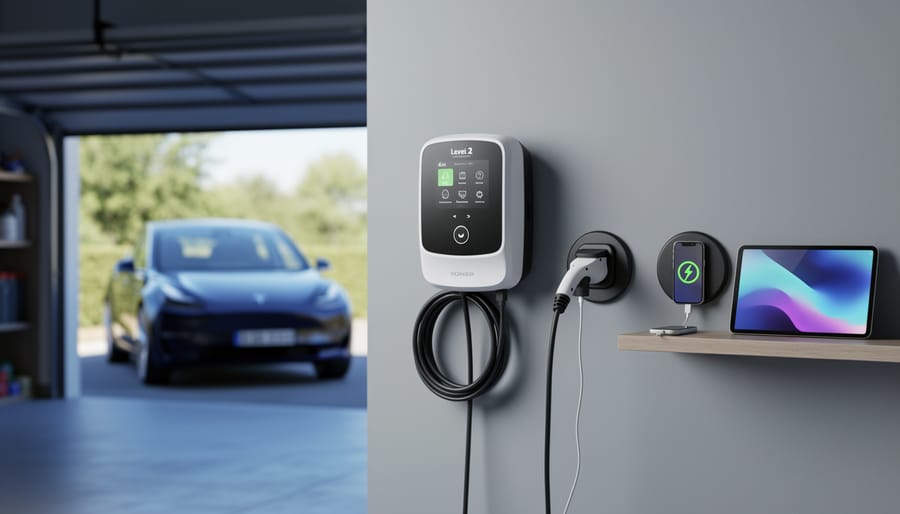
Why 4-in-1 Charging Stations Are Solving EV Owners’ Biggest Frustration
Picture this: Sarah just got home from work, and before she even unlocks her front door, her Tesla is already charging in the garage alongside her husband’s e-bike, her daughter’s tablet, and her own phone. All from a single wall-mounted unit. This is the reality for thousands of EV owners in 2026 who’ve discovered 4 in 1 charging stations.
These multi-device charging hubs have quietly revolutionized home energy management for the EV community. Unlike traditional setups that require separate outlets, adapters, and cable management nightmares, a 4 in 1 station consolidates your entire household’s charging needs into one sleek system. Most models combine a Level 2 EV charger with three additional USB-C or wireless charging pads, though configurations vary by manufacturer.
The appeal goes beyond convenience. Tom Chen, a community member from Portland, cut his monthly electricity costs by 18% after installing one last year. How? Smart load balancing. Quality 4 in 1 stations distribute power intelligently, preventing the circuit overload that happens when everyone plugs in simultaneously at 6 PM. His unit automatically prioritizes his Rivian’s charging during off-peak hours while maintaining steady power to smaller devices.
But here’s what matters most to prospective buyers: are they worth the investment? Installation costs range from $800 to $2,500 depending on your existing electrical setup, but the consolidation alone saves the average household from purchasing three separate charging solutions. Plus, many utilities now offer rebates specifically for integrated charging systems.
This guide walks you through everything you need to know, from understanding core features to real installation stories from our community members who’ve made the switch.
What Makes a Charging Station Truly 4-in-1
A 4-in-1 charging station isn’t just a fancy term for a power strip with extra outlets. It’s an integrated charging hub designed to power your electric vehicle alongside the personal devices that have become essential to modern life. The “4-in-1” configuration typically handles your EV, smartphone, smartwatch, and either wireless earbuds or a tablet, all from a single installation point in your garage or driveway.
Think of it as the charging equivalent of a Swiss Army knife. Instead of running separate cables to different outlets scattered around your garage, you’ve got one central station managing everything. The EV charging component forms the backbone, usually delivering Level 2 charging speeds to your vehicle. Built into or around that main unit, you’ll find dedicated charging zones for your everyday electronics.
Here’s what most 4-in-1 stations include:
- EV charging port delivering Level 2 speeds (typically 240V) for your vehicle
- USB-C port for fast-charging smartphones and tablets
- Wireless charging pad for compatible phones or earbuds
- Dedicated smartwatch charger (often with a magnetic or proprietary connector)
The integration happens through smart power distribution. When your EV is charging at full capacity, the station automatically adjusts power allocation to your devices without overloading your home’s electrical system. Plug in your phone while your car charges overnight, and the station manages both loads efficiently.
What sets these stations apart from simply mounting a USB hub near your EV charger is the unified control system. Many 2026 models let you monitor everything through one app, schedule charging times to take advantage of off-peak electricity rates, and receive notifications when devices finish charging. You’re not juggling multiple systems or worrying about compatibility issues between components.
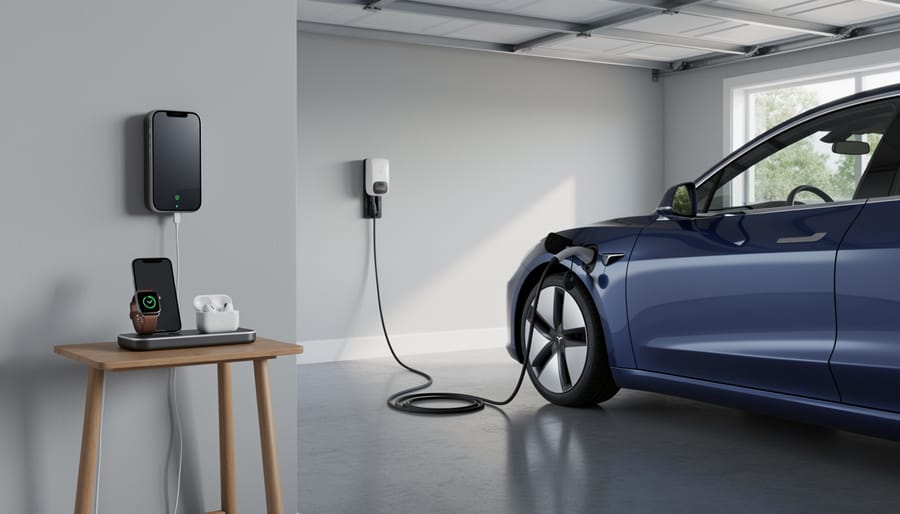
The Real-World Benefits That Matter Most
One Station, Whole Family Charged
The morning chaos of finding chargers disappears when everyone knows exactly where to power up. With a 4-in-1 station in the garage, parents plug in the family EV overnight while the kids grab their spots for phones and tablets before school. No more hunting for available outlets or untangling cables from different rooms.
Sarah Martinez, a Portland-based teacher and EV owner, says her household went from four separate charging locations to one streamlined setup. “My teenagers used to charge their devices in their bedrooms, I’d have my phone in the kitchen, and the car cable was always in the way. Now we have one designated spot, and everyone’s stuff is ready each morning.”
This arrangement works especially well for families with multiple drivers. The station prioritizes EV charging while managing device power automatically, so the car gets its full charge overnight even when three phones are plugged in. Parents appreciate the accountability too, when charging happens in a shared space, those devices tend to get unplugged and actually used instead of staying tethered all night.
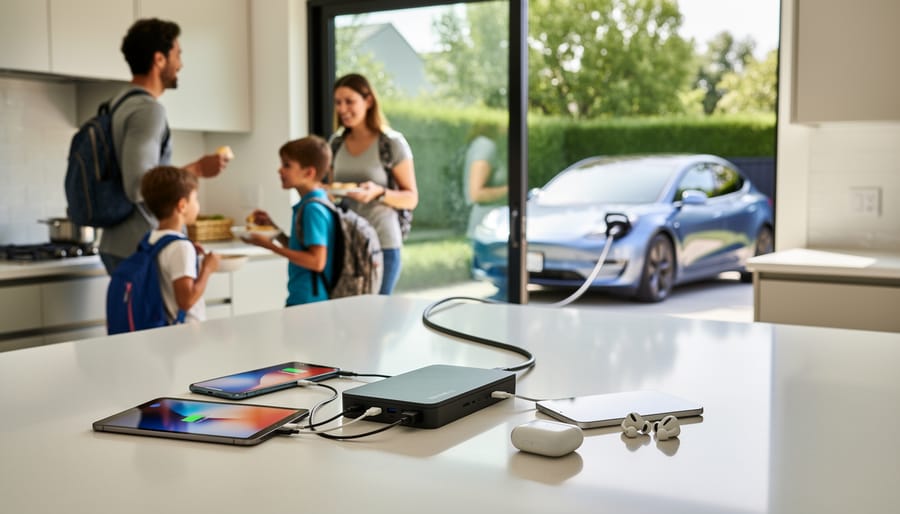
Decluttering Your Charging Space
Sarah Martinez from Portland traded eight separate charging cables and four power strips for a single 4-in-1 station in her garage. “I used to trip over cables reaching from the car to the workbench to the shelf,” she says. “Now everything charges in one spot, and I actually have counter space again.”
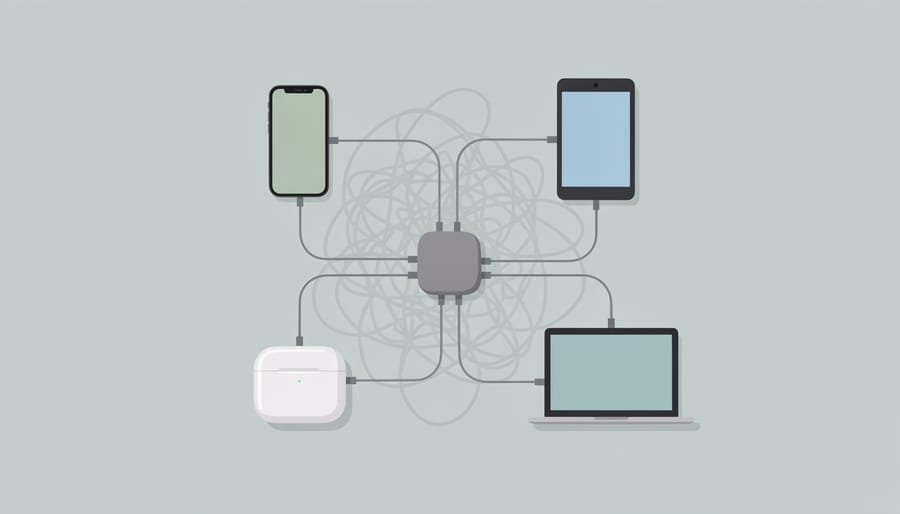
The visual difference is striking. Before, most garages feature tangled cables snaking across walls, multiple adapters plugged into extension cords, and devices scattered across surfaces. After installing a 4-in-1 station, you get one clean charging point with organized cable management built in.
The practical wins extend beyond aesthetics. You need fewer wall outlets, which means less drilling and fewer electrical modifications. Your garage or entryway becomes genuinely functional space instead of a charging depot. And there’s surprising mental relief in knowing exactly where everything charges without hunting for the right cable or available outlet.
Most 4-in-1 stations include integrated cable holders or magnetic attachments that keep cords tidy when not in use. This means even when you unplug your phone to head out, the charging area stays organized rather than devolving into the usual cable chaos by evening.
Key Features to Look for in 2026
The 4-in-1 charging stations available in 2026 represent a significant leap from earlier models, but not all units deliver the same experience. Knowing which features genuinely improve your daily life helps you avoid overpaying for bells and whistles you won’t use while ensuring you get the capabilities that matter.
Smart power distribution stands at the top of the must-have list. This technology automatically allocates the right amount of power to each connected device based on its needs and charging speed. Your EV might pull 48 amps while your smartphone needs just 2.4 amps, and a well-designed system handles this power distribution across multiple ports without you lifting a finger. The alternative, stations with fixed power allocation, forces you into a hierarchy of what charges first, defeating the whole purpose of convenience.
Weather resistance matters more than most people initially realize, even if your station lives in a garage. Temperature swings, humidity, and dust accumulation affect electronics over time. Look for units rated IP65 or higher, which protect against both moisture and particulate intrusion. If you’re installing outdoors, verify the unit meets outdoor electrical enclosure standards for your region. A station that fails after one winter costs far more than the premium you’d pay for proper weatherproofing upfront.
| Feature | Why It Matters | What to Look For |
|---|---|---|
| App Connectivity | Real-time monitoring, scheduling, remote control | Native app with charging history, notifications, energy tracking |
| Energy Monitoring | Track costs, optimize off-peak charging | kWh tracking per device, cost estimates, usage reports |
| Universal Compatibility | Works with your current and future devices | J1772 for EVs, USB-C PD, Qi wireless, adjustable voltage |
| Safety Certifications | Protects home electrical system and devices | UL listing, surge protection, ground fault detection |
App connectivity transforms a basic charger into a smart home device. The best apps let you schedule charging during off-peak hours when electricity rates drop, monitor how much each session costs, and receive alerts if something goes wrong. Some 2026 models integrate with home energy management systems, so your charging station can coordinate with solar panels or home batteries to maximize clean energy use.
Compatibility extends beyond just working with your current EV model. A quality 4-in-1 station accommodates both Level 1 and Level 2 charging, supports various smartphone fast-charging protocols (not just one brand’s proprietary system), and includes future-proofed connections like USB-C Power Delivery ports rated for emerging devices. You’re investing in infrastructure that should serve you for years, so verify it won’t become obsolete when you upgrade your phone or eventually replace your current vehicle.
Installation and Setup: Easier Than You Think
Most EV owners assume they need an electrician and weeks of planning to install a 4-in-1 charging station. The reality? Many modern units are surprisingly straightforward, and you have options that match your comfort level with electrical work.
If your garage already has a 240-volt outlet for your current EV charger, you’re halfway there. Plug-and-play 4-in-1 stations simply connect to this existing outlet. The device portion typically runs on standard household current, drawing minimal additional power. You mount the unit on the wall, plug it in, and you’re charging within 30 minutes. No permits, no electrician, no headache.
Starting from scratch requires more planning but remains manageable. Check your electrical panel’s capacity first. Most homes built after 2000 can handle the 40-50 amp circuit needed for Level 2 EV charging. If you’re upgrading an older panel anyway, bundling the work makes financial sense. Many municipalities now offer expedited permits for EV charging infrastructure, cutting wait times from weeks to days.
Professional installation typically costs between $500 and $1,500, depending on distance from your panel and whether you need a dedicated circuit. Get quotes from electricians experienced with EV chargers specifically. They understand code requirements and can navigate local permitting faster than general contractors.
The smart features shine during setup. Most 2026 models walk you through WiFi connection via their app, then automatically download firmware updates and optimize charging schedules based on your utility’s time-of-use rates. You tell the app when you typically need your car charged, and it handles the rest.
One consideration: outdoor installations need weatherproof enclosures rated for your climate. Units marketed as garage-ready handle temperature swings and humidity, but double-check the IP rating if mounting outside. Your installer will know local requirements, or the manufacturer’s specs clearly indicate suitable environments.
The bottom line? If you managed to set up your current EV charger, you can absolutely handle a 4-in-1 station.
Cost Considerations and Long-Term Savings
The upfront cost of a 4-in-1 charging station typically ranges from $800 to $2,500 in 2026, depending on power output and smart features. That might seem steep compared to a basic phone charger, but you’re replacing multiple pieces of equipment: a Level 2 EV charger ($500-$1,200), a wireless charging pad ($40-$80), a smartwatch dock ($30-$60), and additional USB charging stations. When you add up what you’d spend on separate solutions, the consolidated approach often costs less.
The real savings show up over time. Most 4-in-1 stations feature intelligent power distribution that prevents energy waste, unlike leaving multiple chargers plugged in, which draws phantom power even when devices aren’t charging. Owners report 15-20% reductions in charging-related electricity costs simply by switching to a single efficient unit that monitors and optimizes power delivery across all connected devices.
Beyond direct energy savings, there’s the convenience factor that translates to real money. You’ll eliminate the need to replace lost or damaged cables for multiple devices, and the integrated design means fewer outlet strips and extension cords cluttering your space. Several community members mentioned avoiding the “emergency charger run” to the store because everything they needed was already built into one reliable system.
The durability matters too. Quality 4-in-1 stations carry warranties of five to ten years, outlasting the typical two-year lifespan of budget charging accessories you’d otherwise replace repeatedly. When you calculate the total cost of ownership over a decade of EV driving, the consolidated station often costs half what you’d spend maintaining separate charging solutions for your vehicle and devices.
How 4-in-1 Stations Support Sustainable Living
Efficient charging infrastructure plays a bigger role in sustainability than most people realize. When your devices and EV share a single power source with intelligent distribution, you’re not just saving space, you’re reducing the cumulative energy loss that happens when multiple chargers draw power separately. Those vampire losses from half a dozen wall adapters add up, particularly over months and years of daily use.
The connection between convenience and environmental impact runs deeper still. Every barrier we remove from EV ownership helps more people make the switch from gas-powered vehicles. A charging station that handles your entire family’s needs without complicated setup or cable management means EV ownership feels accessible rather than daunting. That matters when neighbors and friends visit your garage and see how straightforward electric mobility can be.
Communities shift toward sustainable transportation when they witness real-world solutions working smoothly in everyday life. A friend charging their phone on your 4-in-1 station while discussing your EV experience plants seeds that spreadsheets about emissions never could. The energy monitoring features common in 2026 models make it tangible too, you can actually see your household’s charging efficiency improve and share those results.
Sustainable living shouldn’t require sacrifice or complexity. When charging everything becomes simpler than the old way, we’ve created infrastructure that supports both individual lifestyles and collective environmental progress. That’s how technology should work.
Common Questions from New Users
Moving from the benefits and features to actual implementation, most EV owners have similar questions when considering a 4-in-1 charging station. These concerns are completely normal, especially if you’re upgrading from a basic setup or purchasing your first consolidated charging solution.
Will this work with my older EV model?
Most 4-in-1 stations support standard J1772 connectors, which covers the vast majority of EVs sold in North America since 2010. If you drive a Tesla, you’ll need an adapter, which typically comes included or costs under $50.
What if my home’s electrical system is outdated?
A licensed electrician can assess whether your panel needs upgrading, but many homes built after 2000 can support Level 2 charging with minor modifications. Some 4-in-1 stations offer adjustable amperage settings that work with existing 20-amp circuits.
Can I take it with me if I move?
Yes, hardwired stations can be uninstalled and reinstalled at your new home, though you’ll need an electrician for both. Plug-in models with NEMA 14-50 outlets are fully portable and only require the appropriate outlet at your new location.
Are these stations safe to use outdoors?
Quality 4-in-1 stations designed for garage or outdoor use carry NEMA 4 or higher ratings, meaning they’re weather-resistant and built to handle rain, snow, and temperature extremes. Always verify the rating matches your installation location.
What happens if the device charging ports stop working but the EV charger still functions?
Most reputable manufacturers offer separate warranties for different components, and the device charging elements can often be serviced independently. Contact customer support first, as many issues resolve with a simple firmware update through the companion app.
The warranty landscape has improved significantly in 2026, with most manufacturers now offering three to five years of coverage on the main charging unit and one to two years on accessory ports. Keep your purchase receipt and register your product right away to ensure full warranty protection. If you encounter issues, manufacturers typically offer remote troubleshooting through their apps before requiring physical service, which resolves most problems within a day or two.
The evolution of electric mobility isn’t just about better batteries or longer ranges, it’s about removing friction from daily life. Four-in-one charging stations represent exactly this shift: taking what was once a juggling act of cables, outlets, and charging schedules and turning it into something you barely think about.
When your EV, phone, watch, and earbuds all charge from one consolidated hub, you’re not just decluttering your garage or bedroom. You’re experiencing what sustainable transportation was always meant to be, seamless, practical, and designed around how real people actually live. This is the infrastructure that makes electric mobility genuinely accessible, not just theoretically possible.
As more families discover how these integrated solutions simplify their routines while supporting environmental goals, we’re seeing charging evolve from a technical hurdle into a lifestyle advantage. That’s the future of EV ownership: less complicated, more convenient, and built for everyday life.
We’d love to hear how you’ve streamlined your charging setup or what questions you still have about making the switch. Share your experience in the comments below, your insights help other community members navigate their own electric journey.
