
Why Your Local Community Is the Missing Piece in Electric Mobility
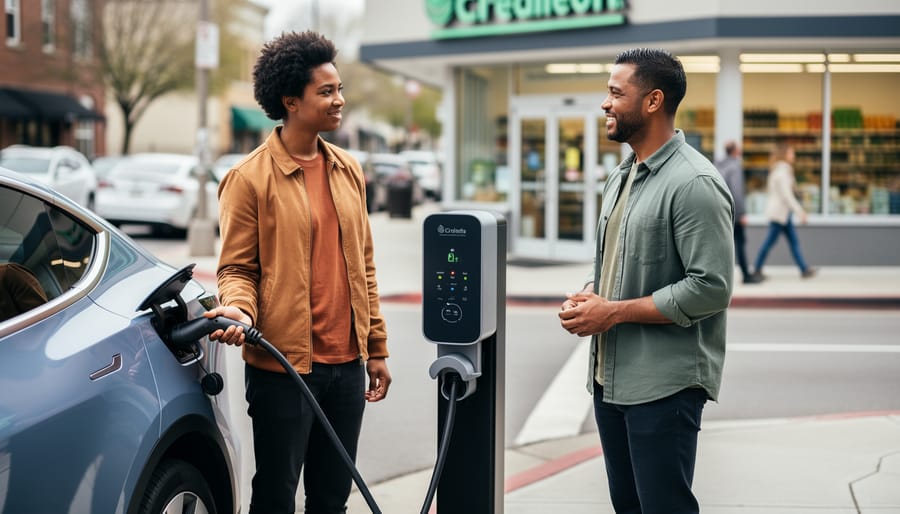
A community-local approach to electric vehicle charging means putting chargers where neighbors already gather, like library lots, grocery stores, apartment complexes, and church parking areas, then letting the people who live there shape how they’re used. It works because charging stops being a separate errand and becomes part of a routine you already have. You shop, you pick up a book, you meet a friend for coffee, and the car gets what it needs in the background.
That’s the idea in plain terms. The reality looks different from one block to the next. A retired couple might care most about a reliable plug near the community center. A renter without a driveway might just want a fair way to charge near home. A small business owner might see a charger as a reason for people to stay ten minutes longer.
None of this requires a big budget or a technical background. It starts with noticing where your neighborhood already comes together and asking what would make everyday driving easier for the people who live there. In this article, we’ll look at what community-level adoption actually looks like, where charging fits naturally into local life, and the practical first steps you or your local group can take, with real-world examples along the way.
What ‘Community Local’ Really Means for Electric Mobility
From Gas Station Stops to Everyday Places
Filling up a gas tank is a dedicated errand. You detour to the station, stand at the pump, and then carry on with your day. It works well, and for generations it has been the routine.
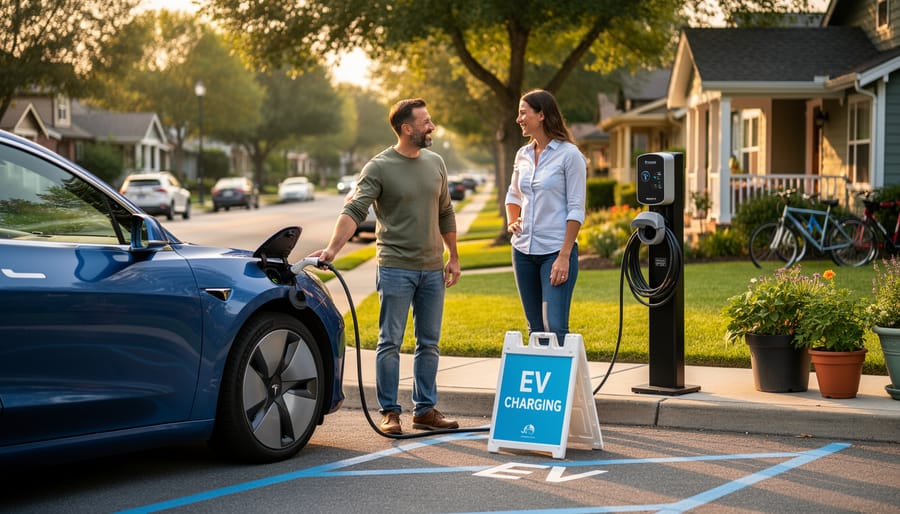
Charging can follow a different rhythm. Because plugging in happens while the car sits parked, the time often overlaps with something you were already doing. You grab groceries, and the car adds range in the meantime. You sit through an evening class or a book club at the library, and the battery tops up while you learn. A coffee with a friend becomes a charging session without anyone planning it.
This is why the local lens matters so much. When chargers sit at the places people already visit each week, the stop stops feeling like a chore. You are not adding a trip to your schedule. You are simply letting the car keep pace with a life that was already in motion.
Where Charging Meets Community Life
Apartments and Shared Housing
For many renters and condo owners, the biggest hurdle to driving electric isn’t the car. It’s the parking spot. Without a private garage or driveway, there’s often no outlet within reach, and plenty of people assume an EV simply isn’t for them.
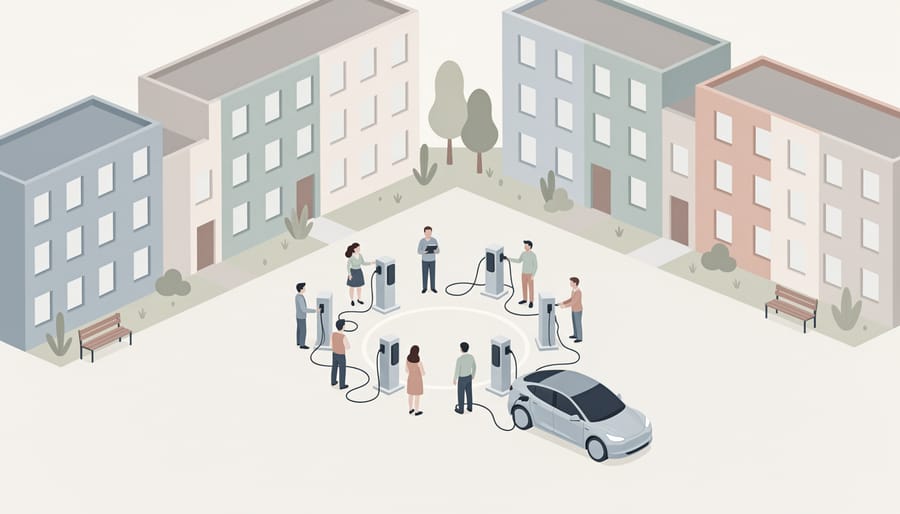
Shared charging changes that math. When a building or complex installs a few chargers that residents take turns using, one setup can serve many households instead of just one. A neighbor who works nights can plug in during the day, while a commuter tops up overnight, and nobody needs a personal wall box.
What makes it work, though, is listening to the people who live there. Residents know where cars actually park, which hours get crowded, and whether a booking system or a simple first-come rule suits the building. A tenant group that shares those details early tends to end up with chargers that get used rather than ignored.
Main Streets and Small Businesses
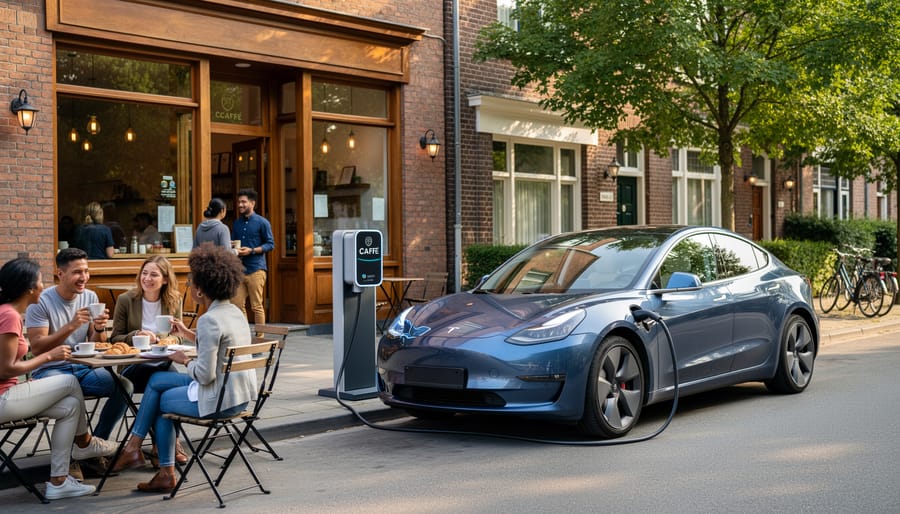
When a driver pulls up to charge on a main street, the stop stops being an errand and becomes a few unplanned minutes in someone else’s neighborhood. A typical scene: a café owner adds a charger by her side door. Drivers plug in, walk twenty steps to her counter, and linger over a coffee while the battery fills. Some become regulars. A few ask about the bakery next door, and she points them there.
That kind of foot traffic is the real payoff. People waiting on a charge tend to browse, eat, and chat, so the wait turns into time spent with local businesses instead of idle time in a parking lot. Setups like 4-in-1 charging can serve several drivers at once, which keeps spots from sitting empty and means more neighbors and visitors have a reason to stay nearby.
The lesson for small business owners is simple: welcome drivers warmly, say where the charger is, and let the street do the rest.
Schools, Libraries, and Community Hubs
Schools, libraries, and community centers are some of the most trusted places in any neighborhood, so a charger there feels like a natural fit. A parent dropping off a child at an evening class or a resident browsing the library shelves can plug in while they’re already there, with no extra trip and no schedule to rearrange. For families who can’t charge at home, that predictability matters.
These spots also make electric mobility something people can see and ask about. A charger outside a school invites a teacher to build a lesson around how batteries store energy, or how a charging session shows up as kilowatt-hours on a screen. A library might host a casual “ask an EV owner” afternoon, where curious neighbors can look at a dashboard and pose their questions without any sales pitch.
When a gathering place offers charging, it quietly says clean mobility belongs to everyone, not just early adopters.
Neighbors Who Made It Happen: Community Stories
Stories like these play out in neighborhoods everywhere, and a few representative scenarios show how local charging takes shape. They are illustrative composites, not reports of specific events, but the patterns will feel familiar to anyone who has watched a community adopt something new.
Picture a mid-sized apartment building where a handful of residents have recently bought EVs and have nowhere to plug in. Instead of each person quietly working around the problem, they start a shared group chat and bring a simple request to the property manager. They arrive with a clear picture of how many people are interested, where parking is available, and what other buildings have done. The conversation takes patience and a few revisions, but the result is shared charging that works for drivers and non-drivers alike. Residents who once passed each other in the hallway now trade tips on charging schedules and swap rides to the farmers market. The outcome goes beyond a plug in the parking lot. People feel heard, and neighbors feel connected.
Now imagine the owner of a small neighborhood bakery who adds a single charger out front. At first it is a modest experiment. Drivers who stop to plug in step inside for coffee and a pastry while they wait, and a few become regulars. The owner learns names, hears recommendations for new menu items, and notices that the quiet mid-morning hours are a little busier. The charger is not a big money-maker, but it makes the shop feel like a gathering place. A thoughtful gesture to welcome visitors turns into genuine goodwill.
Finally, consider someone buying their first EV with plenty of excitement and a long list of questions. They worry about range, about finding a charger, about doing something wrong. A neighbor who has driven electric for a couple of years notices the new car and offers a quick walkthrough. They show how the app works, where the reliable spots are, and what to expect on a typical week. That small act of kindness replaces anxiety with confidence. Before long, the newcomer is passing along the same advice to someone else.
Each scenario shares a thread. The technology matters, but the lasting value comes from people looking out for one another. Shared access, a welcoming business, and a friendly neighbor all turn charging from a private chore into a community habit. If you have a story like these, we would love to hear it.
How to Bring Charging Into Your Own Community
Making Charging Welcoming for Everyone
A charging spot only works for a community if everyone feels invited to use it. Start with clear signage: big, plain-language signs that say who can plug in, what it costs, and how long to stay. If non-members can pay by card or tap a phone, say so right on the unit, so nobody feels shut out.
Think about access, too. Reserve at least one level, well-lit space with room to maneuver a wheelchair or mobility device, and make sure the cable and screen are easy to reach from a seated position. Tell people up front if a spot is for drivers with disabilities.
First-timers often hesitate because they’re afraid of doing it wrong. A short step-by-step card (park, plug in, start, unplug) and a phone number for help go a long way. If you’re deciding how to choose a charger look for models with simple, readable instructions, because a friendly setup turns a first nervous try into a confident habit.
Common Questions About Local Charging
Do I need a home garage to drive an electric car? No. Many people charge at shared spots near where they live, work, or shop. Apartment residents often rely on a mix of building chargers, nearby public stations, and charging while they’re out and about.
Is it hard to figure out how to plug in? Not really. If you’re nervous about your first time, this guide on how to use charging stations walks through it one step at a time. Most stations also post simple instructions right on the unit.
Why do some chargers take longer than others? It comes down to power. A slower charger suits a long afternoon at the library, while a faster one fits a quick grocery run. Understanding charging speed helps you pick the right stop for the time you have.
Can anyone use a community charger? It depends on the location. Some are open to everyone, while others are set aside for residents, customers, or members. Check the signage or ask the host, and be friendly about it. A quick chat often clears things up.
What’s good etiquette at a shared charger? Move your car when you’re done, don’t leave it parked just because it’s convenient, and leave the cable tidy. Small courtesies keep a shared spot working for the neighbors who rely on it.
Think back to that neighbor plugging in at the shared spot, chatting while the car did its thing. The charger wasn’t really the story. The conversation was. That’s what community local charging comes down to: people first, with the technology quietly supporting the way they already live.
Nothing about this requires a big project or a perfect plan. It can start with a question over the fence, a note in your building’s group chat, or a casual word with the owner of your favorite café about what drivers in the neighborhood might need. Small conversations tend to lead to the most practical, welcoming solutions, because they come from the people who will actually use them.
If you’ve seen charging work well in your area, or run into a snag, we’d love to hear about it. Your stories and feedback help others picture what’s possible close to home, and they shape the kind of resources we share.
When you’re ready to go a little deeper, take a look at ‘s membership options and educational resources. There’s no rush and no pressure. Explore at your own pace, bring a neighbor along, and see where the conversation goes.
