
Are Kias Built in the US? What Kia’s Purpose-Built EV Factory Means for Your Next Electric Ride
Yes, some Kias are built in the US, but not all of them. Kia’s Georgia plant, located in West Point, has been assembling vehicles for American buyers since 2009, and it builds some of the brand’s best-known SUVs. Other models arrive from Kia factories in South Korea and, for certain vehicles, Mexico. So the honest answer depends on which Kia you’re looking at.
That detail matters more than it used to. If you’re weighing EV incentives, tracking supply chain risk, or simply like the idea of buying something assembled close to home, where a car is built can shape what you pay and what you qualify for. Kia has also talked openly about its Purpose-Built EV Factory concept, a plant designed from the ground up around electric vehicles rather than retrofitted from gas-car production, which signals where the brand sees its manufacturing heading.
Here’s the practical part. You don’t have to rely on a brochure or a salesperson’s memory. Every new vehicle carries the answer on its own paperwork. The first digit of the VIN tells you the country of final assembly, and the window sticker lists the assembly location in plain text. Plants, models, and sourcing change from year to year, so check the specific car in front of you. Later in this article, we’ll walk through exactly how to read both, so you can confirm any Kia in a couple of minutes.
The Short Answer: Some Kias Are Built in the US, Many Are Not
Here’s the honest version: Kia is a global automaker, and its cars come from factories all over the world. In the US, the company assembles vehicles at its plant in West Point, Georgia. That’s the American piece of the puzzle, and it’s a meaningful one. But it doesn’t cover the whole lineup.
Many Kias sold in the US are built in South Korea and shipped across the Pacific. Others come from plants in different countries, depending on the model. So if you’re asking whether a particular Kia was built in the US, the answer really is “it depends on which one.”
Think of it like a restaurant chain with several kitchens. Some dishes are always made at the local kitchen. Others arrive from a central one. The menu looks the same to you, but where each plate came from varies.
One more thing worth knowing: production locations aren’t set in stone. A model assembled in one country this year may shift to another plant in a later model year as demand, supply chains, and company plans change. That’s why a quick search or a casual “I heard it’s made in Georgia” isn’t a reliable basis for a decision, especially if where it’s built matters to you.
The good news is that you don’t have to guess. Every vehicle carries clear markers of where it was assembled, and we’ll walk through exactly how to read them later in this article. For now, just keep in mind that the right question isn’t “are Kias built in the US?” but “was this specific Kia, in this model year, built in the US?”
A Closer Look at Kia Georgia in West Point
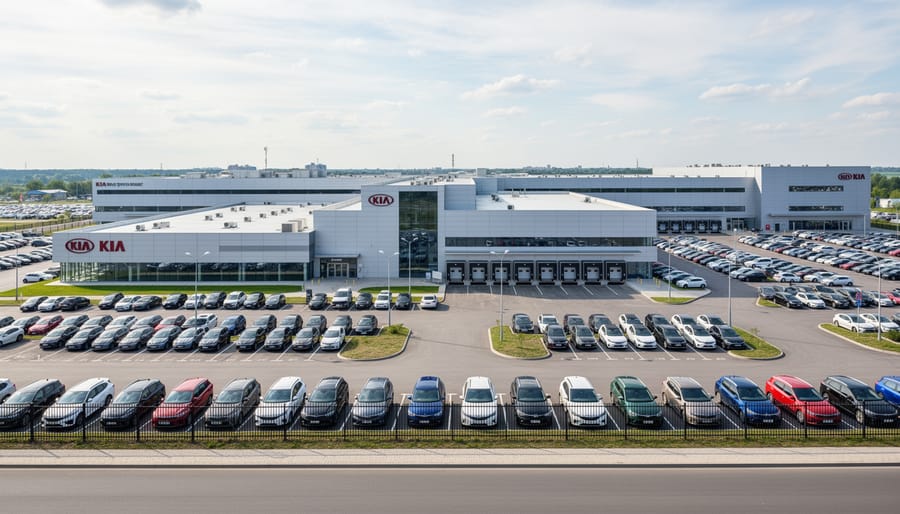
Drive into West Point, Georgia, and you can feel what a car plant means to a small town. Kia Georgia opened there in the late 2000s, and it quickly became one of the biggest stories in the area. Before that, West Point was best known as a quiet mill town near the Alabama line. A major automaker moving in changed how people there thought about their future.
The plant is a big part of the area’s identity. It brought direct jobs on the factory floor, but the ripple effect goes much further. A web of suppliers settled nearby to make seats, glass, wiring, stamped metal parts and countless other components, and those companies hired people too. Restaurants, shops, staffing agencies and housing all felt the lift. When a plant like this hums along, the benefits spread through the local community in ways that go beyond a paycheck, from school partnerships to charity drives to youth sports sponsorships.
For most shoppers, the useful thing to know is the kind of vehicles Georgia is known for. The plant has long been associated with larger, family-oriented models, especially SUVs and crossovers built for American roads and American habits. If you’ve ever seen a roomy three-row Kia on your street, there’s a fair chance it traces back to this part of the country.
Here’s the honest caveat: model assignments can change from one model year to the next, and Kia doesn’t build everything in Georgia. So rather than guessing, treat West Point as the anchor of Kia’s US manufacturing story, not a guarantee for every badge on the lot. For any specific car, the VIN and door label will tell you exactly where it was assembled, and we’ll walk through how to read both a little later.
What ‘Purpose-Built EV Factory’ Actually Means
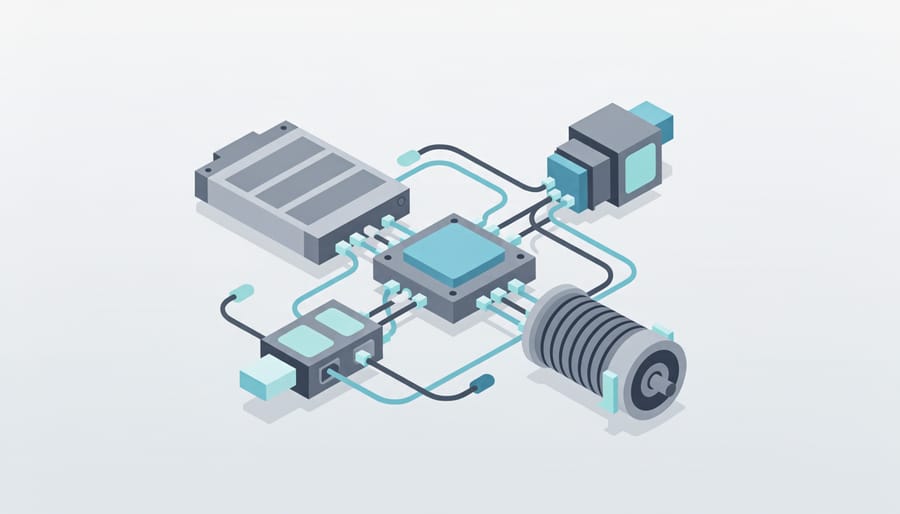
Think about the difference between a kitchen designed from scratch and an old one that’s been remodeled. In the remodel, you’re working around walls, plumbing, and layouts that were built for a different era. In the new build, the stove, fridge, and counter space all sit exactly where they make the most sense. That’s the idea behind a “purpose-built” EV factory.
A purpose-built EV facility is designed from the ground up to make electric vehicles. Most car plants today were originally set up to build gas-powered cars, and automakers have adapted them over time to handle EVs too. That works, but it means fitting new technology into spaces and workflows that weren’t planned for it.
So why does the distinction matter to you as a driver?
First, efficiency. When a plant’s layout is built around how EVs are actually assembled, the process can flow more smoothly, with fewer awkward handoffs between stations. Smoother production can translate into more consistent quality.
Second, battery integration. The battery pack is the heart of an EV. It’s large, heavy, and tied closely to everything from range to safety to how fast the car can recharge. A facility planned around batteries from day one can handle them with purpose rather than as an add-on. That matters for things like charging speed, which depends on how well the battery and vehicle systems are engineered to work together.
Third, future flexibility. Battery technology and EV designs are evolving quickly. A factory built for electric vehicles can be set up to adapt as those changes arrive, instead of being limited by decades-old assumptions.
Kia’s Purpose-Built EV Factory reflects this direction of travel: a shift from adapting old systems toward building new ones made for electric mobility. The details of how and where that plays out will keep developing, so it’s best to treat it as a signal of where the brand is heading rather than a finished story.
Why Where Your EV Is Built Matters
Where an EV is assembled affects more than a line on a window sticker. For tech-savvy, eco-conscious buyers, it touches supply chains, local economies, and your wallet.
Start with logistics. A car built closer to where it’s sold travels fewer miles by ship and rail, which can mean less fuel burned in transit and, often, fewer shipping delays. Regional assembly also supports nearby suppliers and skilled jobs, so the benefits ripple into communities that build the cars many of us drive.
Ownership matters too. When parts and technicians are concentrated in your region, service can be easier to find. And US final assembly is one factor that has figured into federal EV incentive rules. Those rules change, though, and they depend on more than assembly alone, so check current requirements before you count on any credit.
Here’s a balanced way to weigh the tradeoff:
Pros
- Shorter supply chains can mean less shipping distance and fewer transit delays.
- US assembly may help a vehicle qualify for certain federal incentives, depending on current rules.
- Regional production supports local jobs and supplier networks.
- Nearby parts and trained technicians can make service simpler.
Cons
- Imported models may offer trims or options that US-built versions don’t.
- A popular US-built model can still have wait times.
- Assembly location alone doesn’t guarantee a better car or lower price.
- Incentive eligibility can shift, so today’s advantage may not last.
Whichever way you lean, the right car is the one that fits your life. Once you’ve picked it, learn charging step-by-step and choose the right station for your routine.
How to Check Where Your Kia Was Made
The fastest way to settle the question is to check the car itself. Three spots on any Kia will tell you where it was made, and none of them takes more than a minute.
Start with the VIN, the 17-character code stamped on the lower corner of the dashboard (visible through the windshield on the driver’s side) and printed on your registration and insurance card. The first character tells you the country of manufacture. A 1, 4, or 5 means the vehicle was built in the United States, while a K means South Korea, 3 means Mexico, and 2 means Canada. If your VIN starts with 5, you’re looking at a US-built Kia.
Next, open the driver’s door and look at the label on the door jamb. It lists the manufacturer, the build date, and a line reading “Made in” or “Assembled in” followed by the country. This is the quickest confirmation, and you can read it right on the lot or in your driveway.
If you’re shopping for a new car, read the window sticker, sometimes called the Monroney label. It lists the final assembly point, plus the percentage of parts that come from the US and Canada and the country of origin for the engine and transmission. That parts breakdown adds useful context, because a car can be assembled in one country with components from several others.
When these sources agree, you have your answer. Check them on the exact vehicle you’re considering, since two cars of the same model can come from different plants.
Common Questions About Kia Manufacturing
Shoppers tend to ask the same handful of things once they learn that Kia builds cars in more than one country. Here are the quick answers.
Are all Kias made in Korea?
No. Kia builds vehicles in South Korea, but it also has assembly plants elsewhere, including its West Point, Georgia facility in the US. Which one built your car depends on the specific model and model year.
Does “built in the US” mean every part is American?
Not at all. Final assembly can happen in the US while engines, batteries, electronics, and other components come from suppliers around the world. The window sticker on a new car breaks down parts content, so you can see the details yourself.
Can the same model be built in different countries?
Yes, it happens. Automakers sometimes assemble one model in several plants to serve different markets, so two cars with the same name can have different origins. That’s another reason to check the VIN rather than assume.
Will future Kia EVs be assembled in the US?
Kia has signaled a stronger electric focus, including its Purpose-Built EV Factory concept, but production plans can shift over time. If a particular future model matters to you, look for current announcements from Kia before making a decision.
If you want certainty about one car, the VIN and the door jamb label are your best tools, and they beat any general rule of thumb. Production details change from one model year to the next, so treat any broad claim, including the ones in this article, as a starting point and confirm the specifics for the exact vehicle in front of you.
So, are Kias built in the US? Some are, and many aren’t. Kia assembles vehicles at its West Point, Georgia plant, while other models arrive from South Korea and elsewhere around the world. The answer changes from model to model, and it can shift from one model year to the next, so a blanket “yes” or “no” won’t serve you well.
What stays constant is the direction of travel. Kia’s Purpose-Built EV Factory points toward a future where electric vehicles aren’t squeezed into lines designed for gas cars, but get a facility planned around them from the start. That’s a good sign for anyone who wants their next car to be electric.
If you’re shopping or just curious about the Kia you already own, don’t rely on a dealer’s guess or an old forum post. Check the VIN: the first character tells you the country of manufacture. Then look at the label on the driver’s door jamb, and on a new car, the window sticker, which lists the final assembly point. It takes about a minute.
Wherever your EV was built, it’s doing its part. Every electric car on the road nudges everyday driving toward cleaner mobility, and that’s a story we’re all part of. If you’re curious about what comes next, keep exploring our charging and EV ownership resources.
